November 20th, 2026
What Are The Best Blackline Alternatives in 2026?

By Dave Ewing | Published November 2026
BlackLine is of the best-known financial automation solutions in the market helping organisations automate account reconciliations, transaction matching, financial close management and accounts receivable processes. Not every business requires the same level of financial automation, depending on existing systems, transaction volumes and requirements, a more specialised or flexible solution may be a better fit.
For finance teams looking for the best BlackLine alternatives, there are several platforms worth considering in 2026.
This guide compares the best BlackLine alternatives in 2026, examining their key features, strengths and ideal use cases to help businesses identify the right solution for their finance operations.
So What Are The Best BlackLine Alternatives in 2026?
The best BlackLine alternative depends on the financial workflows an organisation seeks to automate. While some platforms focus on financial close management and account reconciliation, others concentrate on cash application, accounts receivable and broader finance automation.
What Are the Best BlackLine Alternatives at a Glance?
Which BlackLine alternatives are best for your organisation ultimately hinges on your business size, ERP landscape, transaction load, automation needs and overarching AR strategy.
| Platform | Best Suited For | Key Specialisation |
| Cashbook | Cash application and bank reconciliation | AR automation and cash management |
| HighRadius | Enterprise AR automation | Order-to-Cash |
| FloQast | Financial close management | Accounting workflows |
| Trintech | Enterprise finance teams | Accounting workflows |
| Oracle Account Reconciliation | Oracle EPM users | Account reconciliation |
| OneStream | Large, complex organisations | Financial consolidation |
| Numeric | Modern accounting teams | AI-powered financial close |
These platforms address different parts of the accounts receivable process. The best choice depends on whether your priority is cash application, payments, collections, reconciliation, Order-to-Cash automation or broader finance transformation.
Why Are Businesses Looking for Blackline Alternatives?
BlackLine provides a broad range of financial automation capabilities, supporting organisations throughout their financial close and accounts receivable processes. Its platform includes solutions for account reconciliation, transaction matching, intercompany accounting and cash application.
However, a comprehensive financial automation platform is not necessarily the most suitable option for every finance department.
There are several reasons why businesses may consider alternatives to BlackLine:
1. Cost and Implementation Requirements
Enterprise financial automation platforms can involve considerable investment in software licensing, implementation, integration and ongoing support. For businesses looking to automate only a small number of financial processes, investing a wider platform may not provide the best value. A more specialised solution may offer the required functionality without introducing additional complexity.
2. Specialist Automation Requirements
Some finance departments face particularly complex cash application or bank reconciliation challenges. High transaction volumes, multiple banking relationships, different payment formats and large volumes of customer remittances can create significant manual workloads. Businesses with these requirements may benefit from software specifically designed to automate these processes.
3. ERP Integration
Many organisations have established ERP systems that support their existing accounting and financial operations. Replacing or significantly changing these systems can be disruptive and resource-intensive. Consequently, businesses often look for financial automation software that integrates with their current ERP infrastructure. Compatibility with existing banking systems, payment channels and accounting applications is an important consideration when evaluating alternatives.
4. Flexibility and Scalability
As businesses expand, their financial operations often become more complex. Additional entities, currencies, banking relationships and transaction volumes can place greater demand on finance teams. The right software should be capable of supporting these requirements while maintaining efficient, accurate and controlled financial processes.
What Makes a Good BlackLine Alternative?
Rather than simply comparing the number of features offered by each BlackLine alternative, finance teams should consider how well a platform supports their financial processes, integrates with existing systems and aligns with their organisation’s automation strategy.
When evaluating alternatives, it is important to consider both financial close capabilities and the ability to automate everyday finance operations, including cash application and bank reconciliation.
| Evaluation Criteria | Weighting | What to Look For |
| Account Reconciliation & Transaction Matching | 25% | The platform’s ability to automate account reconciliations, match transactions and identify discrepancies. |
| Financial Close Management | 20% | Capabilities for managing month-end close, journal entries, approvals, workflows and financial controls. |
| ERP & Banking Integration | 15% | The range and flexibility of connections to ERP systems, banks and other financial applications. |
| Cash Application & AR Automation | 15% | Its ability to automate payment matching, remittance processing, collections and deductions. |
| Scalability & Global Capabilities | 10% | Its ability to support growing transaction volumes, multiple entities, currencies and regions. |
| Implementation & Ease of Use | 10% | How straightforward the platform is to implement, navigate and adopt across finance teams. |
| Customer Support and Overall Value | 5% | The quality of support alongside the overall value provided by the platform. |
The weighting places the greatest emphasis on account reconciliation, transaction matching and financial close management, as these are central to BlackLine’s core functionality. ERP integration and cash application capabilities are also important considerations when assessing how effectively an alternative can support wider financial automation requirements.
What are the Best BlackLine Alternatives in 2026?
Choosing the right software can significantly improve cash flow, reduce manual work, and increase accuracy. Here are the top tools to consider in 2026.
1. Cashbook
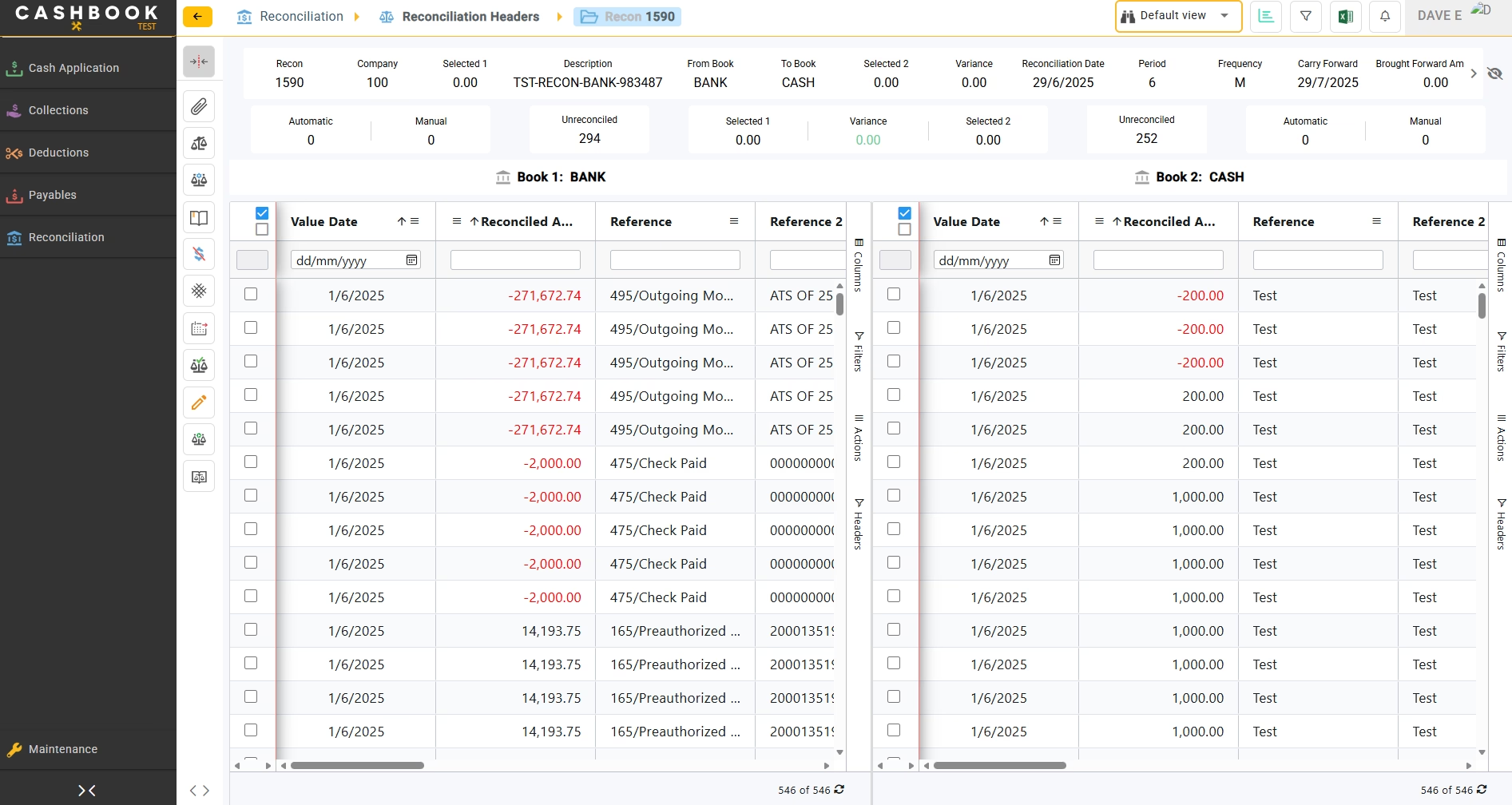
Cashbook is a financial automation platform specialising in cash automation. accounts receivable automation and bank reconciliation. It helps finance teams automate the processing and matching of incoming payments, reduce manual workloads and improve cash flow visibility. With experience integrating with multiple ERP systems and banking platforms, Cashbook is particularly suited to organisations managing high volumes of financial transactions.
| Best For | Key Strength | Pricing Tier | ERP Integrations | Deployment Time |
| Mid-sized organisations, enterprises | Up to 95% automation + specialist cash app | $-$$ | Extensive | Short |
- Key Features: Automated cash app and payment matching, bank statement processing and reconciliation, lockbox and bank statement automation, automated deductions management and ERP posting, integration with multiple ERP systems and banking formats.
- Best for: Finance teams seeking a dedicated cash application and accounts receivable automation solution that incorporates seamlessly with their current structure.
- Where it falls short: Cashbook is primarily a cash application and AR automation solution, rather than broader finance platforms that offer coverage of financial close, treasury and other finance functions.
- Ideal Buyer: Mid-sized and enterprise organisations who want to reduce manual cash application work without changing their current ERP environment. Suitable choice for businesses whose main priority is reducing manual payment processing, improving reconciliation accuracy and streamlining accounts receivable operations.
- Why Consider Cashbook?: Cashbook is a strong option for organisations looking to improve specific areas of financial automation, particularly cash application and bank reconciliation. Cashbook provides a specialised solution for automating everyday cash management processes.
2. HighRadius
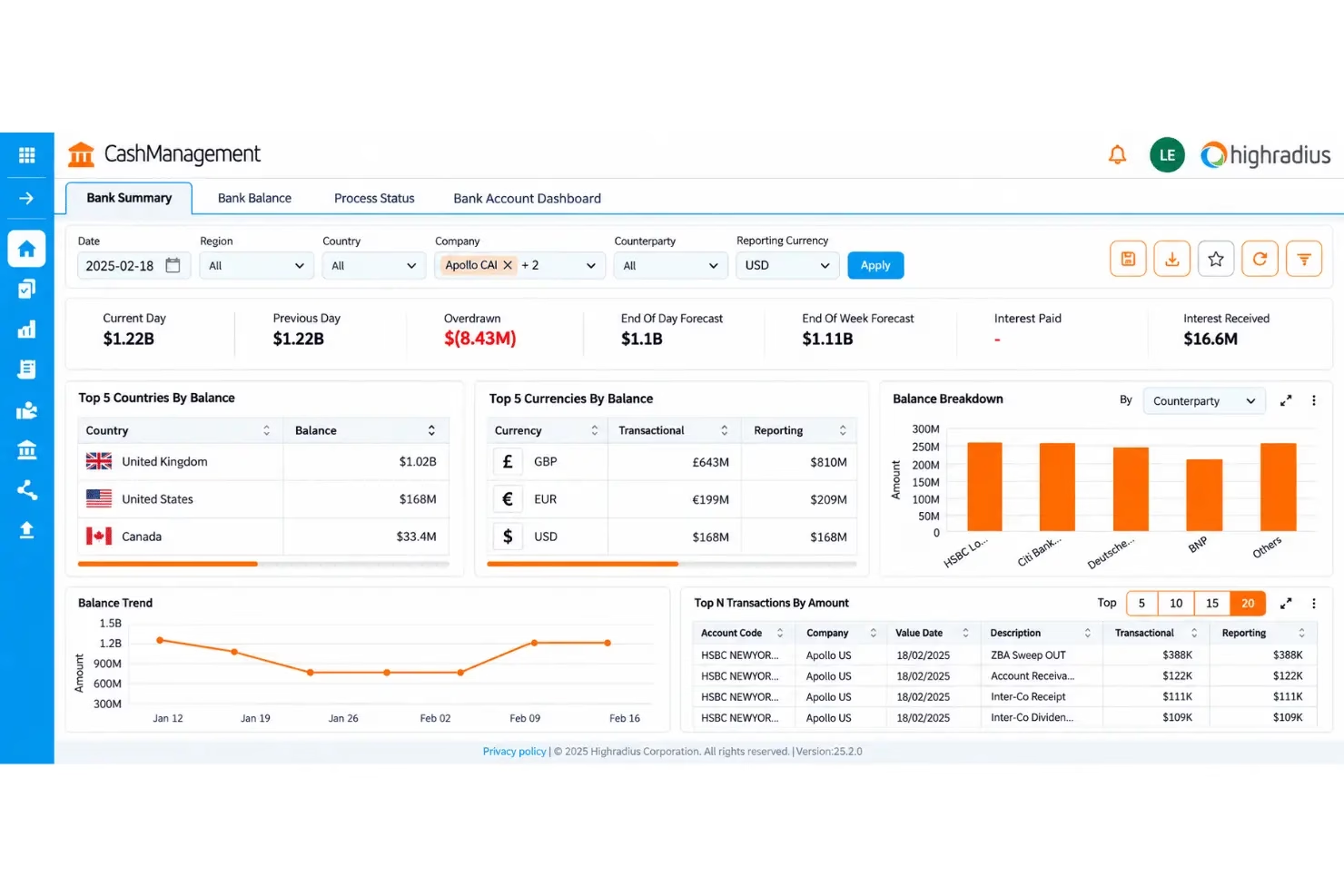
HighRadius is an enterprise finance automation platform designed to help organisations optimise accounts receivable, treasury and other financial operations. Its solutions use AI and automation to streamline processes across the Order-to-Cash cycle, making it particularly relevant to businesses managing large transaction volumes and complex finance operations.
| Best For | Key Strength | Pricing Tier | ERP Integrations | Deployment Time |
| Mid-sized and large enterprises | AI-powered Order-to-Cash and AR automation | $$$ | Extensive | Moderate – Long |
- What it does well: HighRadius offers extensive AI-powered automation across accounts receivable, including remittance capture, cash application, collections, deductions and credit management
- Best for: Large and mid-sized organisations looking to automate multiple finance processes, particularly across the Order-to-Cash cycle.
- Where it falls short: Its broad range of functionality may be more than some organisations require. Businesses looking to address one specific process may find a more specialised solution easier to implement and manage.
- Ideal Buyer: Enterprise and mid-market finance teams seeking an integrated platform to automate accounts receivable and other financial operations.
- Key Features: Automated cash application and payment matching, AI-powered remittance capture and processing, credit management and collections automation, deductions and dispute management, electronic invoicing and B2B payment processing, financial close, reconciliation and treasury solutions.
- Why Consider HighRadius?: HighRadius is worth considering for organisations seeking to automate a wider range of finance processes alongside account reconciliation. Its extensive accounts receivable capabilities can help finance teams improve their financial processes and gain greater visibility into customer payment behaviour.
3. FloQast
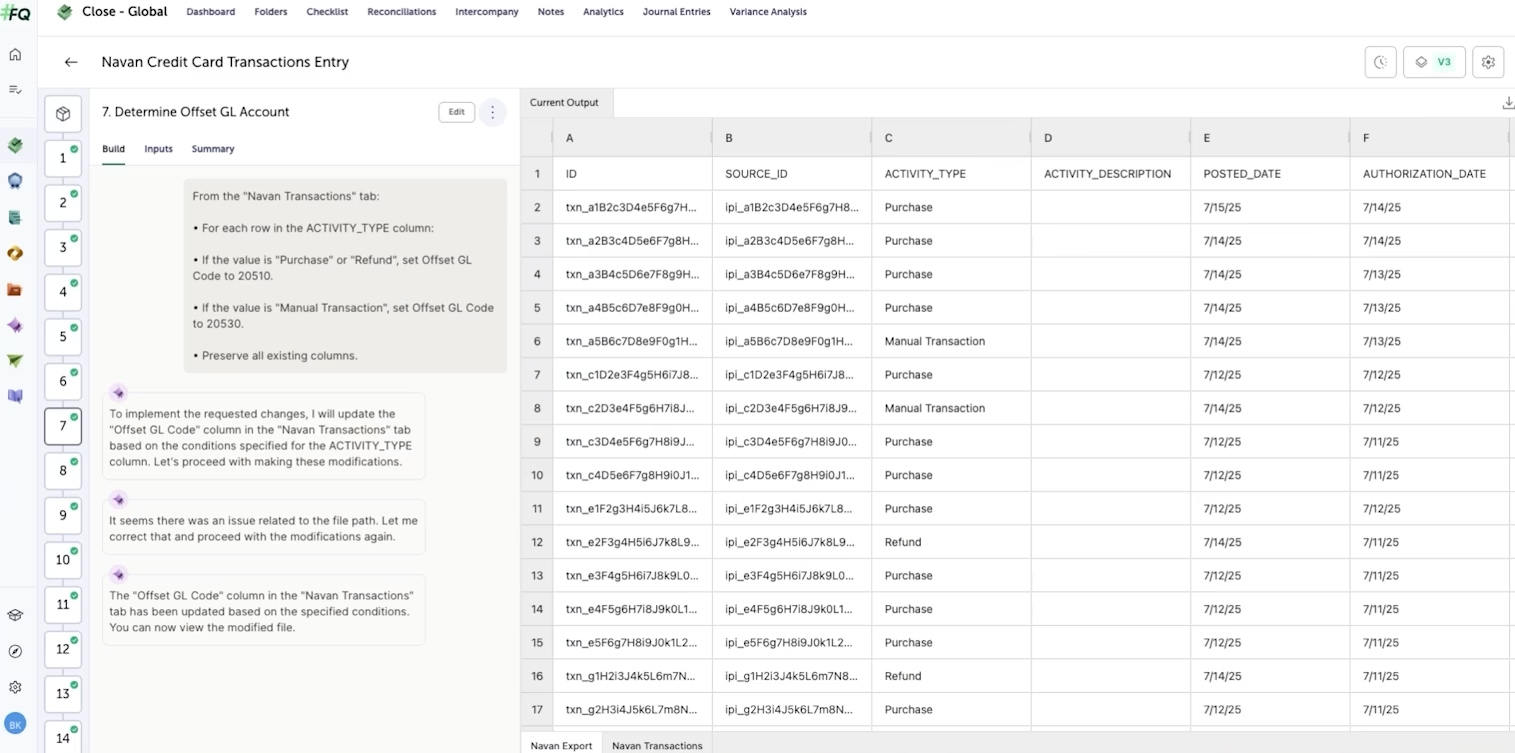
FloQast is a cloud-based accounting automation platform focused on financial close management and accounting workflows. It helps finance teams organise month-end close activities, manage account reconciliations and improve collaboration across accounting departments. Its platform provides greater visibility into close progress while helping organisations standarise accounting processes and maintain audit readiness.
| Best For | Key Strength | Pricing Tier | ERP Integrations | Deployment Time |
| Mid-sized businesses and accounting teams | Financial close management and automated reconciliations | $$ – $$$ | Extensive | Moderate |
- What it does well: FloQast provides a centralised platform for financial close management, account reconciliations and accounting workflows, helping finance teams automate tasks, improve visibility and maintain audit readiness.
- Best for: Mid-sized and enterprise accounting teams looking to streamline month-end close activities, improve collaboration and standardise financial workflows.
- Where it falls short: FloQast is primarily focused on accounting operations and financial close management. Businesses requiring more extensive cash application, remittance processing and bank reconciliation automation may need additional specialist software.
- Ideal Buyer: Finance and accounting teams seeking to reduce manual close activities, improve reconciliation processes and gain greater control over financial reporting.
- Key Features: Financial close management and task tracking, automated account reconciliations, transaction matching, accounting workflow automation, supporting documentation and audit trails, AI-powered accounting assistance.
- Why Consider FloQast?: FloQast is worth considering for organisations looking to improve the efficiency and accuracy of their financial close processes. Its combination of reconciliation tools, workflow management and automation helps accounting teams coordinate month-end activities, reduce manual work and gain better visibility into close progress.
4. Trintech
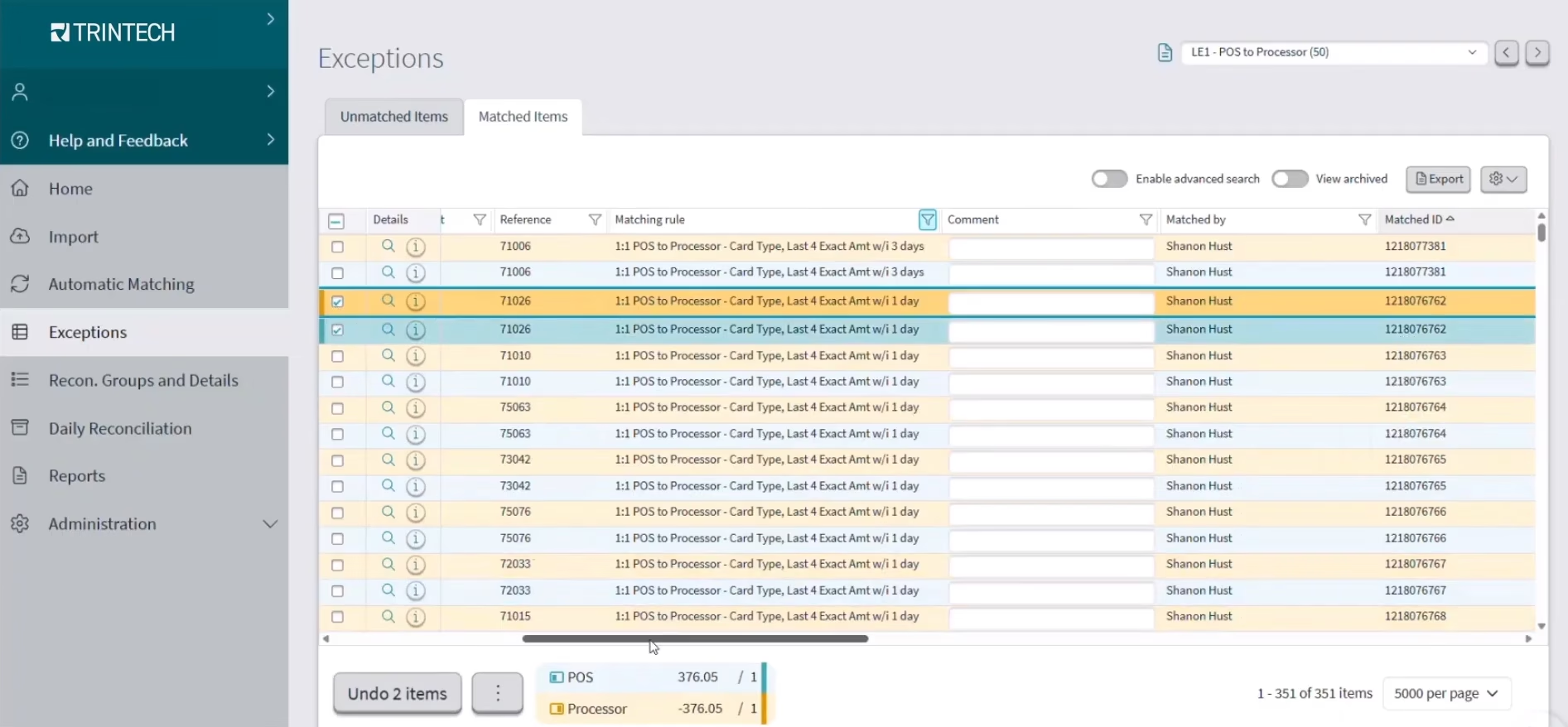
Trintech provides financial close and reconciliation software designed to help organisations automate accounting processes, improve financial controls and reduce manual work. Its Cadency platform supports enterprise finance teams across account reconciliation, transaction matching, journal entry management and close management. The platform is particularly suited to organisations with complex accounting structures and extensive compliance requirements.
| Best For | Key Strength | Pricing Tier | ERP Integrations | Deployment Time |
| Large enterprises and multinational organisations | Enterprise account reconciliation and financial close automation | $$$ | Extensive | Moderate – Long |
- Key Features: Automated balance sheet account reconciliations, transaction matching and exception management, financial close task management and workflows, journal entry preparation and management, intercompany accounting, governance, risk and compliance capabilities.
- What it does well: Trintech offers a broad financial close platform with capabilities spanning account reconciliation, transaction matching, journal entries, intercompany accounting and compliance.
- Best for: Large organisations looking to automate complex financial close and reconciliation processes while strengthening internal controls.
- Where it falls short: Its extensive enterprise functionality may be more complex than smaller finance teams need. Organisations primarily looking for dedicated cash application or remittance automation may also require a separate specialist solution.
- Ideal Buyer: Large and multinational organisations with complex accounting structures, high reconciliation volumes and demanding financial control requirements.
- Why Consider Trintech?: Trintech is a strong option for businesses looking for an enterprise-level financial close solution. Its Cadency platform brings several accounting processes together, helping finance teams improve control over reconciliations, journal entries and period-end activities. Its focus on audit trials, approvals and standardised workflows also makes relevant to organisations operating across multiple entities or regions.
5. Oracle Account Reconciliation
Oracle Account Reconciliation is part of Oracle Cloud Enterprise Performance Management (EPM). It helps organisations automate account reconciliations, transaction matching and financial close activities. The platform is designed to improve the accuracy and consistency of financial reporting while giving finance teams greater control over reconciliation workflows and compliance processes.
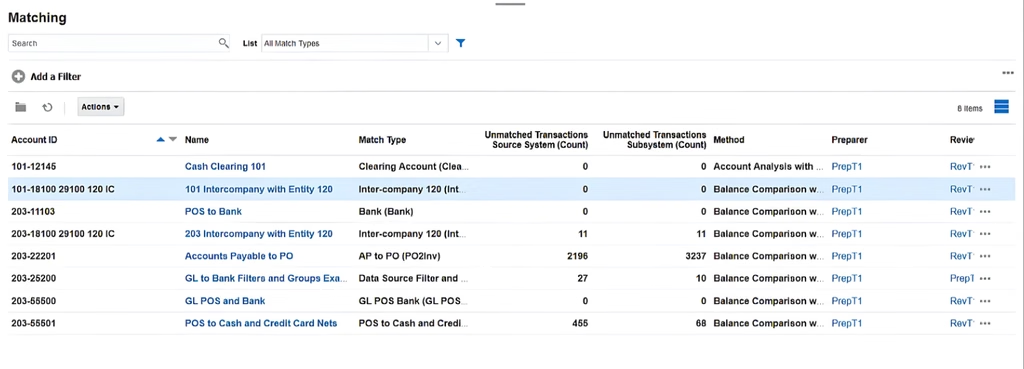
| Best For | Key Strength | Pricing Tier | ERP Integrations | Deployment Time |
| Mid-sized & enterprise | Automated account reconciliation and transaction matching | $$$ | Extensive (strongest within Oracle ecosystem) | Moderate – Long |
- Key Features: Automated account reconciliation and certification, high-volume transaction matching, configurable matching rules and exception identification, automated journal entry creation for reconciliation adjustments, reconciliation workflows, approvals and audit trails, integration with Oracle Cloud EPM and other ERP data sources.
- What it does well: Oracle provides advanced account reconciliation and transaction matching capabilities, including configurable matching rules, automated certifications, exception reporting and audit trails.
- Best for: Organisations seeking enterprise-grade account reconciliation and financial close capabilities, particularly those already operating within the Oracle ecosystem.
- Where it falls short: Its strongest value is within the wider Oracle EPM environment. Businesses using a range of non-Oracle systems may need to assess integration requirements and implementation complexity carefully. It is also not primarily designed as a dedicated cash application platform.
- Ideal Buyer: Mid-sized and large organisations with complex reconciliation requirements, particularly those already using Oracle ERP or Cloud EPM.
- Why Consider Oracle Account Reconciliation?: Oracle Account Reconciliation is a relevant alternative for organisations already using Oracle’s wider financial management ecosystem or looking to consolidate their financial close processes within Oracle Cloud EPM. Its transaction matching capabilities support complex, high-volume reconciliations, while its workflow and compliance features help standardise account reviews and maintain audit documentation.
6. OneStream
OneStream is a corporate performance management (CPM) platform that brings financial consolidation, reporting, planning and financial close processes together. Its financial close solutions include account reconciliation, transaction matching and journal entry management, helping organisations manage complex accounting activities within a unified platform. OneStream is particularly relevant to multinational businesses managing multiple entities, currencies and reporting requirements.
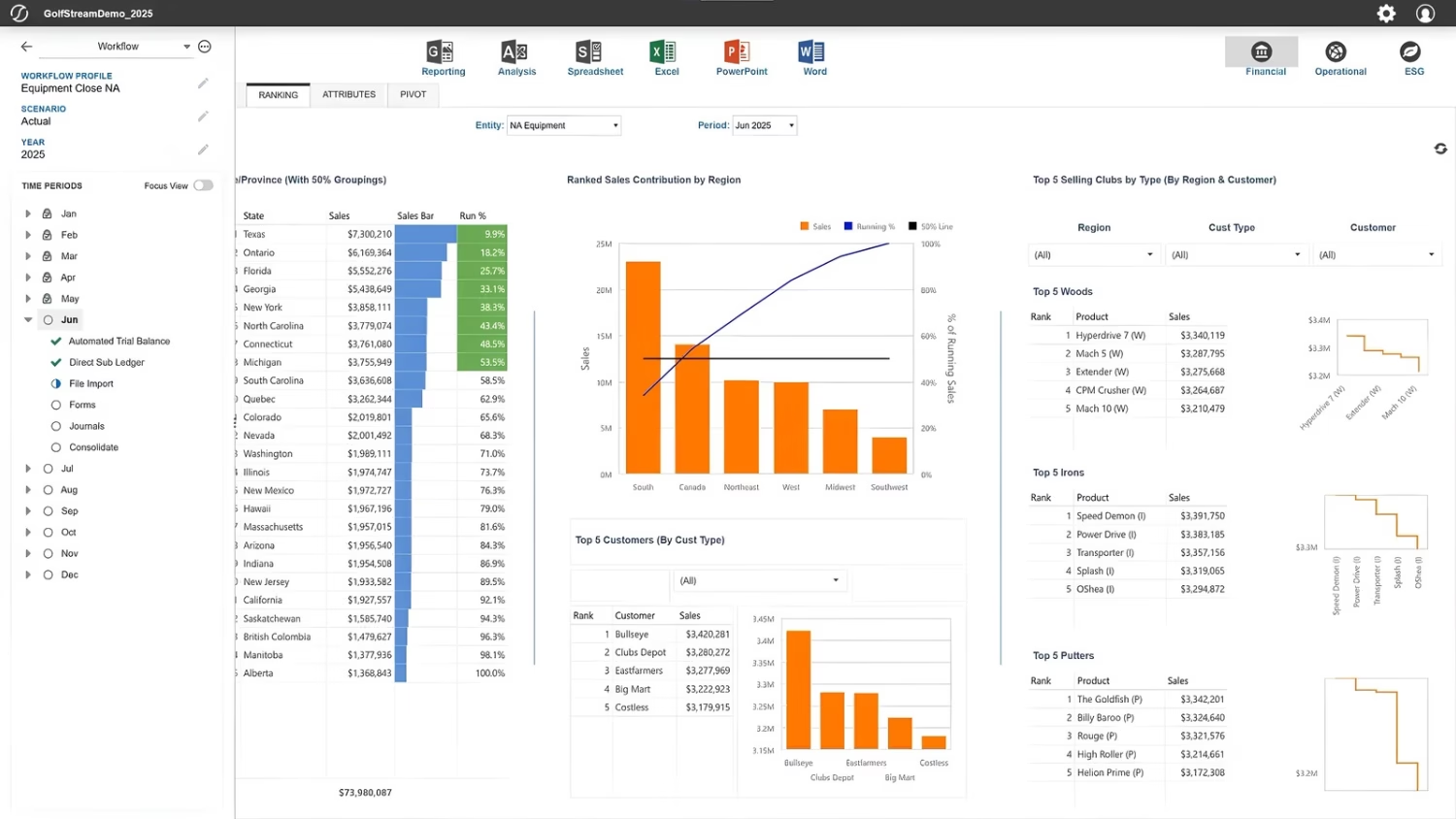
| Best For | Key Strength | Pricing Tier | ERP Integrations | Deployment Time |
| Large enterprises and multinational organisations | Financial consolidation, reporting and close management | $$$ | Extensive (multiple ERP and financial systems) | Long |
- Key Features: Financial consolidation and reporting, account reconciliation and transaction matching, journal entry management and automation, intercompany accounting and eliminations, financial planning, budgeting and forecasting, financial data integration and reporting workflows.
- What it does well: OneStream combines financial close, account reconciliation, transaction matching, consolidation and reporting capabilities within a unified platform.
- Best for: Large organisations seeking to bring financial consolidation, reporting and close management together.
- Where it falls short: Its broad CPM functionality may be more extensive than businesses looking for a straightforward reconciliation solution require. Organisations with immediate cash application or remittance processing needs may also need dedicated automation software.
- Ideal Buyer: Large and multinational organisations managing complex financial consolidation, reporting and planning requirements across multiple entities.
- Why Consider OneStream?: OneStream is worth considering for organisations looking beyond standalone reconciliation software towards a broader corporate performance management solution. Its unified platform connects financial close activities with consolidation, planning and reporting, helping finance teams work with consistent financial data across the organisation. This makes it particularly suitable for larger businesses with complex reporting structures and multiple entities.
7. Numeric
Numeric is a modern accounting automation platform designed to help finance teams streamline financial close and reconciliation processes. It combines close management, balance sheet reconciliation and transaction matching with AI-powered capabilities to reduce repetitive accounting work. Its platform is aimed at finance teams looking to modernise accounting workflows and gain better visibility into their financial operations.
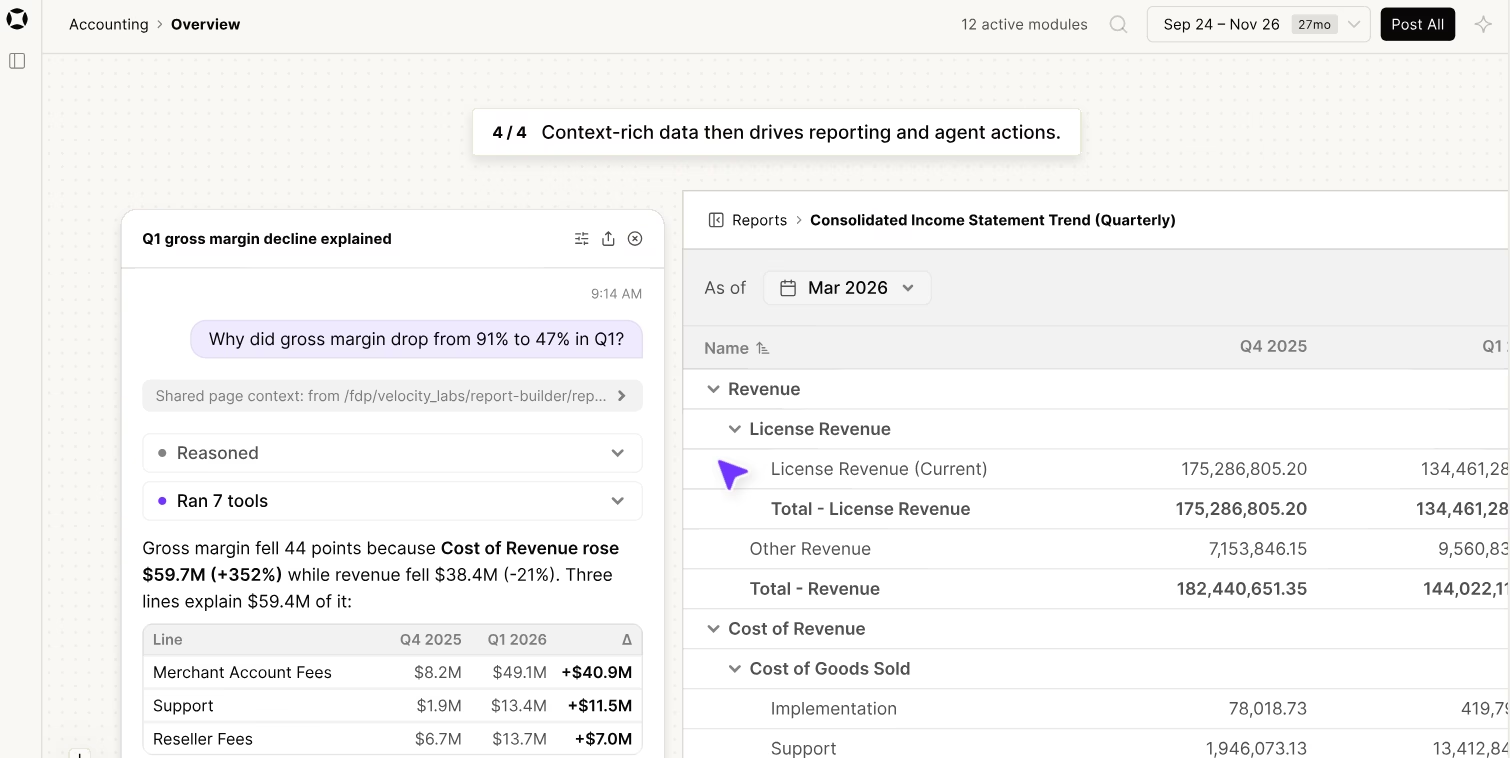
| Best For | Key Strength | Pricing Tier | ERP Integrations | Deployment Time |
| Growing and mid-sized finance teams | Modern financial close automation and AI-powered reconciliation | $$ – $$$ | Growing | Short – Moderate |
- Key Features: Centralised financial close checklists and task management, automated balance sheet reconciliations, transaction matching and configurable matching rules. AI-powered anomaly detection and exception identification, financial reporting and flux analysis, cash management and intercompany transaction matching.
- What it does well: Numeric combines financial close management with automated reconciliations, transaction matching and AI-powered tools to help reduce manual accounting work.
- Best for: Modern finance and accounting teams looking to automate close activities and improve reconciliation workflows.
- Where it falls short: Numeric is a newer platform and may not offer the same depth of established enterprise functionality or implementation track record as some larger financial software providers. Organisations with highly complex global requirements should assess its capabilities carefully.
- Ideal Buyer: Growing and mid-sized organisations looking to modernise their accounting processes.
- Why Consider Numeric?: Numeric is an option for organisations looking for a more modern approach to financial close automation. Its combination of reconciliation, close management and AI-powered tools can help accounting teams identify exceptions, reduce repetitive tasks and improve visibility over month-end activities. It may be particularly appealing to finance teams looking for a modern platform with a focus on automation and ease of use.
What Should You Look for When Replacing BlackLine?
If you’re considering replacing BlackLine, it is important to assess potential alternatives based on your organisation’s financial processes, existing systems and automation priorities.
- Your ERP Environment: Make sure the solution integrates with the ERP platforms your finance teams currently use, allowing information to flow between systems without disrupting existing workflows.
- Your Payment and Remittance Sources: Consider how effectively the platform processes different payment and remittance formats, including bank files, lockboxes, email remittances, PDFs, Excel spreadsheets and EDI.
- The Level of Automation You Need: Evaluate how much of your cash application and accounts receivable processes can be automated, including payment matching, exception handling and manual workflows.
- Your Wider AR Requirements: Identify whether your main priority is cash application or whether you also need additional capabilities such as collections, deductions management and bank reconciliation.
- Scalability: Ensure the solution can accommodate growing transaction volumes and support additional entities, currencies, banking relationships and business requirements as your organisation expands.
- Implementation and Support: Consider the implementation process, training requirements and level of ongoing customer support available when evaluating potential providers.
- Overall Value: Look beyond the initial cost and compare the overall value each solution delivers. The right platform should provide the automation, integration and functionality your finance team needs without unnecessary complexity.
Which BlackLine Alternative Is Best for Your Business?
The right alternative ultimately depends on the financial processes your organisation needs to improve.
| For… | Consider |
| Specialist Cash Application and Bank Reconciliation | Cashbook |
| End-To-End Accounts Receivable | HighRadius |
| Financial Close Management | FloQast |
| Enterprise Financial Close | Trintech |
| Oracle Users | Oracle Account Reconciliation |
| Financial Consolidation | OneStream |
| Modern Accounting Teams | Numeric |
If your priority is specialist cash application with strong ERP and banking integration, bank reconciliation and additional AR capabilities, Cashbook is a strong choice.
For organisations seeking broader capabilities, alternatives such as HighRadius, FloQast, Trintech, Oracle Account Reconciliation, OneStream, Numeric offer different approaches depending on the business’s requirements.
How Do You Choose the Right BlackLine Alternative?
Selecting the right financial automation software requires an understanding of your organisation’s existing systems, transaction volumes and operational priorities.
Before making a decision, consider the following:
1. Identify Your Main Financial Challenges
Determine which processes are creating the greatest workload for your finance team. Is the priority reducing manual account reconciliations, improving cash application, automating the month-end close or gaining greater visibility over receivables? Identifying these requirements will help establish which software capabilities are most important.
2. Review Your Existing ERP Infrastructure
Consider which ERP and accounting systems your organisation currently uses. The ideal solution should integrate effectively with your existing infrastructure and support the financial processes already in place.
3. Consider Transaction Volumes
Businesses processing thousands of payments and banking transactions may require more specialised automation capabilities than organisations with relatively straightforward financial operations. Consider whether the software can accommodate your current transaction volumes and future business growth.
4. Evaluate Integration and Implementation Requirements
Assess how the software connects with your banks, ERP systems and other financial applications. Consider the resources required for implementation, data migration, ongoing maintenance and support.
5. Look Beyond the Initial Investment
Compare the overall value of each solution, including implementation, licensing, support and the potential reduction in manual processing. The best solution is not necessarily the one with the most features. It is the one that addresses your organisation’s financial requirements effectively.
Blackline vs. Cashbook: What Is the Difference?
Although BlackLine and Cashbook both support financial automation, their core areas of specialisation are different. BlackLine provides a broad financial automation platform covering financial close and consolidation, intercompany accounting and invoice-to-cash processes. Cashbook focuses on automating high-volume financial transactions, particularly cash application, bank reconciliation and accounts receivable processes. For organisations looking to improve cash management operations, this distinction is important.
| Comparison | BlackLine | Cashbook |
| Cash application | ✓ | ✓ |
| Bank reconciliation | ✓ | ✓ |
| Collections | ✓ | ✓ |
| Deductions management | ✓ | ✓ |
| ERP integration | ✓ | ✓ |
| Primary Focus | Financial close, consolidation and invoice-to-cash | Cash application and cash management |
BlackLine may be a good fit for large organisations looking to automate financial close, account reconciliations, transaction matching and broader accounting processes
Cashbook may be a better fit for finance teams primarily focused on automating cash application, remittance processing and bank reconciliation while retaining their existing ERP systems
Is Cashbook a Good Alternative to Blackline?
Yes. For organisations looking to automate cash application, bank reconciliation and accounts receivable, Cashbook is a strong alternative worth considering. While BlackLine provides a comprehensive financial automation platform, Cashbook specialises in the processes that directly influence how businesses receive, allocate and reconcile incoming cash.
With the ability to automate up to 95% of cash application processes, Cashbook helps finance teams reduce manual workloads, improve transaction accuracy and gain greater visibility over cash flows. Its integration capabilities also allow businesses to retain their existing ERP systems while improving the efficiency of their financial operations.
Cashbook has been helping organisations automate complex financial processes since 1992, with particular expertise in high-volume transaction environments and established ERP systems. For businesses that do not require a complete financial close platform but want to improve their cash management operations, Cashbook offers a focused alternative.
Key capabilities include:
- Specialist Cash Application Automation: Cashbook automates the matching of incoming payments against outstanding invoices using bank statement data, lockbox files and customer remittances. The software can process remittance information received through multiple formats, including EDI, PDF, Excel and email attachments. This helps reduce manual payment allocation, minimise unapplied cash and improve the accuracy of receivables records.
- Bank Reconciliation: The software automates the matching of bank statement transactions against general ledger entries, using configurable matching rules to identify corresponding transactions. Cashbook supports a range of banking data formats and integrates banking information with existing ERP systems. This allows finance teams to process banking information more efficiently while reducing the workload associated with manual reconciliation.
- Collections Management: Centralise customer notes, payment information and supporting documents while forecasting payments, identifying overdue accounts and automating dunning processes.
- Deductions Management: Automate deductions coding, routing, approvals and write-offs while maintaining visibility of supporting remittance and bank information.
- ERP and Banking Integration: Cashbook has particular experience with Infor ERP solutions, including XA/MAPICS, BPCS/LX and M3, alongside SAP, Oracle, JD Edwards and other ERP platforms. For organisations operating established ERP systems, Cashbook provides a way to automate cash management processes without replacing their existing financial infrastructure.
- Multi-Entity and Multi-Currency Support: Support finance teams operating across multiple entities, sites, banks, currencies and ERP environments.
- Cashbook is rated 4.6/5 on G2
Final Thoughts
No single BlackLine alternative is the right fit for every organisation. The most suitable solution will depend on your business size, ERP platform, transaction volumes, financial processes and overall automation requirements.
Cashbook is a strong fit for organisations looking to improve cash application, bank reconciliation and accounts receivable automation. Its range of capabilities includes automated payment matching, remittance processing, deductions management and bank reconciliation. By automating cash application while integrating with existing ERP and banking systems, Cashbook helps finance teams reduce manual processing, improve payment accuracy and gain greater visibility over incoming cash without replacing their wider finance infrastructure.
Other platforms may be better suited depending on your priorities. HighRadius offers broader Order-to-Cash and accounts receivable automation, while FloQast focuses on financial close management and accounting workflows. Trintech provides enterprise reconciliation and financial close capabilities, while Oracle Account Reconciliation is particularly relevant to organisations operating within the Oracle ecosystem. OneStream supports financial consolidation, reporting and corporate performance management, while Numeric offers a modern approach to financial close and reconciliation automation.
Ultimately, the right BlackLine alternative should provide the functionality, integration and scalability your finance team actually needs. For organisations prioritising cash application automation, bank reconciliation and accounts receivable efficiency, Cashbook presents a specialist alternative that works alongside existing ERP and financial systems.
Discover how Cashbook can help automate your financial operations, reduce manual processing and improve cash flow visibility.
FAQ: Frequently Asked Questions About BlackLine Alternatives
What are the best BlackLine alternatives in 2026?
Some of the leading BlackLine alternatives in 2026 include Cashbook, HighRadius, FloQast, Trintech, Oracle Account Reconciliation, OneStream and Numeric. Each platform offers different financial automation capabilities, depending on whether an organisation prioritises financial close management, account reconciliation, cash application or accounts receivable automation.
What is the difference between BlackLine and Cashbook?
BlackLine provides a broad financial automation platform covering financial close, consolidation, intercompany accounting and invoice-to-cash processes. Cashbook specialises in cash application, bank reconciliation and accounts receivable automation, making it particularly relevant to organisations looking to improve high-volume cash management processes.
What is the best BlackLine alternative for bank reconciliation?
The best bank reconciliation software depends on an organisation’s banking environment, ERP system and transaction volumes. Cashbook specialises in automated bank reconciliation, matching bank statement transactions against general ledger entries using configurable matching rules.
What should businesses consider before switching from BlackLine?
Businesses should evaluate their existing financial processes, ERP integrations, banking requirements, transaction volumes and automation priorities. It is also important to consider implementation timelines, data migration, ongoing support and the potential impact on existing accounting workflows.
Which BlackLine alternative is best for cash application?
Cashbook and HighRadius are two options for organisations looking to automate cash application. Both support payment matching and remittance processing, although Cashbook has a more specialised focus on cash application and bank reconciliation, while HighRadius covers a broader range of Order-to-Cash processes.
How can cash application automation improve accounts receivable performance?
Cash application automation helps finance teams process incoming payments more efficiently by reducing manual matching, identifying exceptions and improving the accuracy of customer account records. With Cashbook, automating payment matching and remittance processing can help reduce unapplied cash, improve visibility over outstanding receivables and support faster cash allocation.
Can BlackLine alternatives help reduce manual cash application?
Yes. Some financial automation platforms offer cash application capabilities that help finance teams automatically match incoming payments with outstanding invoices. Solutions such as Cashbook use automated matching to process payment and remittance information from sources including email, PDFs, Excel, EDI files, customer portals and lockboxes. This reduces manual data entry, improves payment accuracy and helps accelerate cash allocation.
Related Resources:
- Best Cash Application Tools: 2026 Official Guide – Cashbook: Choosing the right cash application software can significantly improve cash flow, reduce manual work, and increase accuracy. Here are the top cash application tools to consider in 2026.
What Are The Best HighRadius Alternatives in 2026? – Cashbook: HighRadius is an accounts receivable and Order-to-Cash automation platform that is used by many. It can do everything from cash application, collections, deductions to credit and other finance processes. But it is not right for every organisation.
- ERP Integration Matters | Cashbook: Manual finance work rarely stays inside finance. A spreadsheet delay turns into an IT ticket. A posting error triggers a rollback request. A disconnected tool becomes one more system IT has to support, monitor, and explain. Finance automation shouldn’t sit next to core systems as a workaround. It should connect cleanly with the ERP, banking data, and the finance workflows already running the business. For IT Managers, the real question isn’t “does this automate the task?” It’s “does this reduce complexity across the environment, or add to it?“
- Why Buy Cashbook Automation: Cashbook’s Chairman, Greg Barbour, asks a very important question – Why would companies buy Cashbook? While Greg was visiting Cashbook HQ this Summer, he took some time to share his thoughts.
- Will Cashbook Take My Job? – Your Role with Cashbook | Cashbook: Automation is a key topic among finance professionals, raising an essential question: Will technology replace my job?
Cashbook were able to build a system to incorporate our requirements providing the business with a user friendly bank reconciliation software.
About Author
Dave Ewing is the Marketing Manager at Cashbook, bringing over 20 years of expertise in marketing and technology to the role. He focuses on sharing valuable insights into cash management, accounts receivable automation, bank reconciliation, and ERP-integrated financial processes. In addition to his marketing efforts, Dave plays a key role in product development, helping to create innovative solutions that empower finance teams to work more efficiently.